Digital Infrastructure

Land registration digital system

How Digital Land Registry Systems Reduce Corruption

How Digital Land Registry Systems Reduce Corruption Modern land governance breaks down when ownership data is scattered across ministries, manually processed, and updated through non-transparent workflows. Digital land registry systems fix this by turning land ownership into a continuously validated digital system of record. Artificial intelligence, digital governance platforms, procurement analytics, automated auditing, and transparency […]

How Digital Land Registry Systems Reduce Corruption Read More »

The WHOs recent report Strategy for Optimizing National Routine Health Information Systems indicates a roadmap for enhancing nationwide healthcare systems 1024x683 1

Building National Healthcare Information Systems

Building National Healthcare Information Systems National healthcare information systems are becoming essential infrastructure for any countries, enabling unified patient records, real-time hospital coordination, improved disease surveillance, and data-driven public health decision-making across fragmented healthcare networks. Many healthcare systems still rely on paper records, isolated hospital databases, and manual reporting processes, which limit efficiency, accuracy, and

Building National Healthcare Information Systems Read More »

Customs and Border Control Infrastructure Systems

How Governments Can Modernize Customs and Border Control Infrastructure

Customs Intelligence Platform: How Governments Modernize and Monetize Border Infrastructure EdgeOfContent builds a sovereign customs intelligence platform — a full-stack national system that digitizes border operations, automates clearance, detects fraud in real time, and converts trade data into direct revenue intelligence for governments. Artificial intelligence, digital governance platforms, procurement analytics, automated auditing, and transparency systems

How Governments Can Modernize Customs and Border Control Infrastructure Read More »

img data centre

Why National Stability Depends on Digital Infrastructure

Why National Stability Depends on Digital Infrastructure In the modern era, national stability increasingly depends on resilient digital infrastructure capable of supporting government operations, financial systems, communications, healthcare, cybersecurity, transportation, and critical national services in real time. Artificial intelligence, digital governance platforms, procurement analytics, automated auditing, and transparency systems are transforming how governments detect risks,

Why National Stability Depends on Digital Infrastructure Read More »

What Are AI Models for Government 1024x576 1

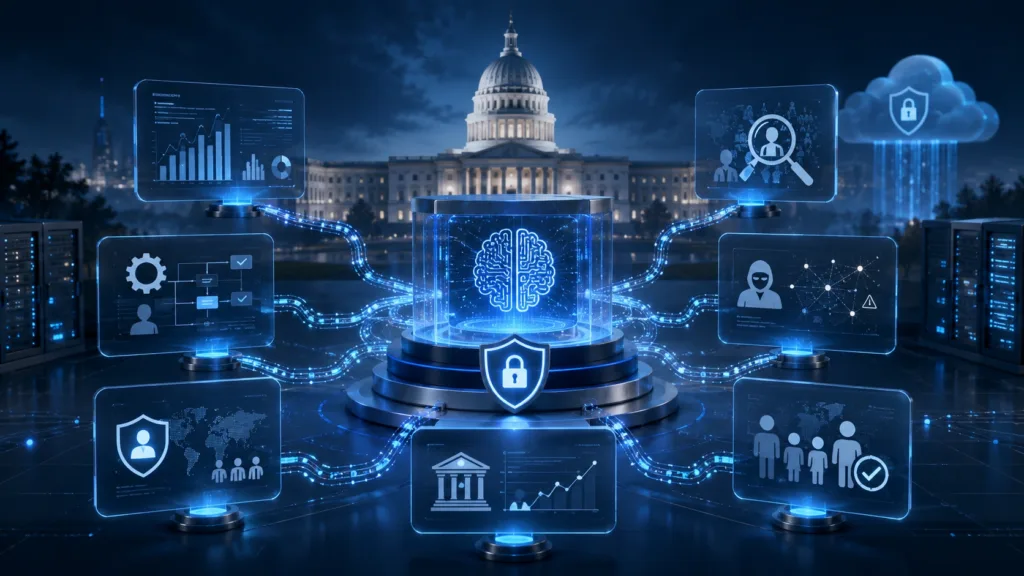
Building AI-Powered Government Monitoring Systems

Building AI-Powered Government Monitoring Systems Modern governments operate across highly interconnected digital ecosystems where security threats, infrastructure failures, public emergencies, cyber attacks, and operational disruptions can emerge simultaneously and spread rapidly across institutions. Artificial intelligence, digital governance platforms, procurement analytics, automated auditing, and transparency systems are transforming how governments detect risks, strengthen accountability, and protect

Building AI-Powered Government Monitoring Systems Read More »

how to prevent computer viruses

Malware, Spyware, Viruses, Trojan Horses and Modern Cyber Threats Explained

Malware, Spyware, Viruses, Trojan Horses and Modern Cyber Threats Explained Modern cyber threats no longer target only large governments or global corporations. Businesses of all sizes are increasingly exposed to malicious software, credential theft, infrastructure compromise, operational disruption, ransomware attacks, and covert surveillance activity. Understanding cybersecurity threat categories, malware variants, and operational vulnerabilities helps organizations

Malware, Spyware, Viruses, Trojan Horses and Modern Cyber Threats Explained Read More »

Surface Web Deep Web Dark Web

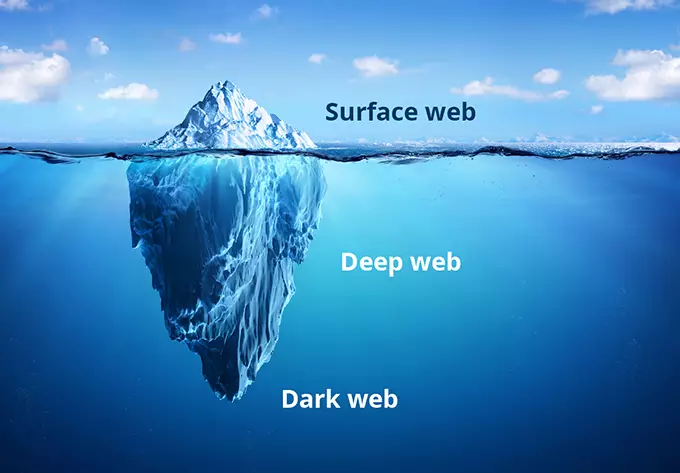
Understanding the Surface Web, Deep Web, and Dark Web

Understanding the Surface Web, Deep Web, and Dark Web The internet is usually divided into three major layers: the surface web, the deep web, and the dark web. While most people only interact with publicly searchable websites every day, the majority of internet activity and digital infrastructure actually exists outside public search engine visibility. Artificial

Understanding the Surface Web, Deep Web, and Dark Web Read More »

insider threat cybersecurity e1779136465516

How Governments Can Detect Internal Security Threats Using Technology

How Governments Can Detect Internal Security Threats Using Technology Modern security threats do not always originate from external attackers. Governments increasingly face internal risks involving unauthorized access, insider abuse, credential compromise, operational negligence, data leakage, infrastructure manipulation, policy violations, and covert intelligence activity occurring within institutional environments themselves. Artificial intelligence, digital governance platforms, procurement analytics,

How Governments Can Detect Internal Security Threats Using Technology Read More »

Secure Inter Ministerial Data Sharing Platforms 2

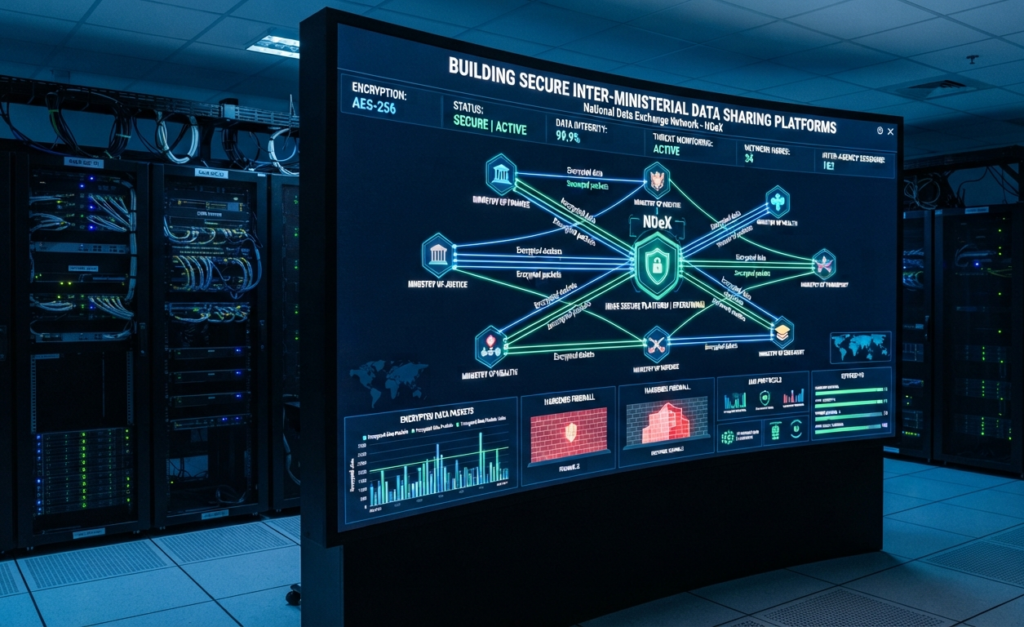
Building Secure Inter-Ministerial Data Sharing Platforms

Building Secure Inter-Ministerial Data Sharing Platforms Modern governments depend heavily on data coordination across ministries, agencies, security operations, healthcare systems, border control, financial institutions, telecommunications infrastructure, and public administration platforms. Without secure inter-ministerial data sharing, governments often struggle with fragmented operations, delayed decision-making, duplicated systems, and limited national visibility. Artificial intelligence, digital governance platforms, procurement

Building Secure Inter-Ministerial Data Sharing Platforms Read More »

iStock 1211265864

How AI-Powered Threat Detection Can Protect National Institutions

How AI-Powered Threat Detection Can Protect National Institutions National institutions are becoming increasingly dependent on digital infrastructure for banking, healthcare, telecommunications, government operations, education, logistics, and public services. As digital adoption accelerates across the continent, cyber threats are also becoming faster, more automated, and more difficult to detect using traditional security methods alone. Artificial intelligence,

How AI-Powered Threat Detection Can Protect National Institutions Read More »

Scroll to Top