English
 Fr
Fr العربية
 BI
BI 中文
中文 РФ
РФBest Tech Stack for Scalable SaaS Startups
Choosing the right technology stack can determine how efficiently your SaaS product scales, performs, and evolves over time.
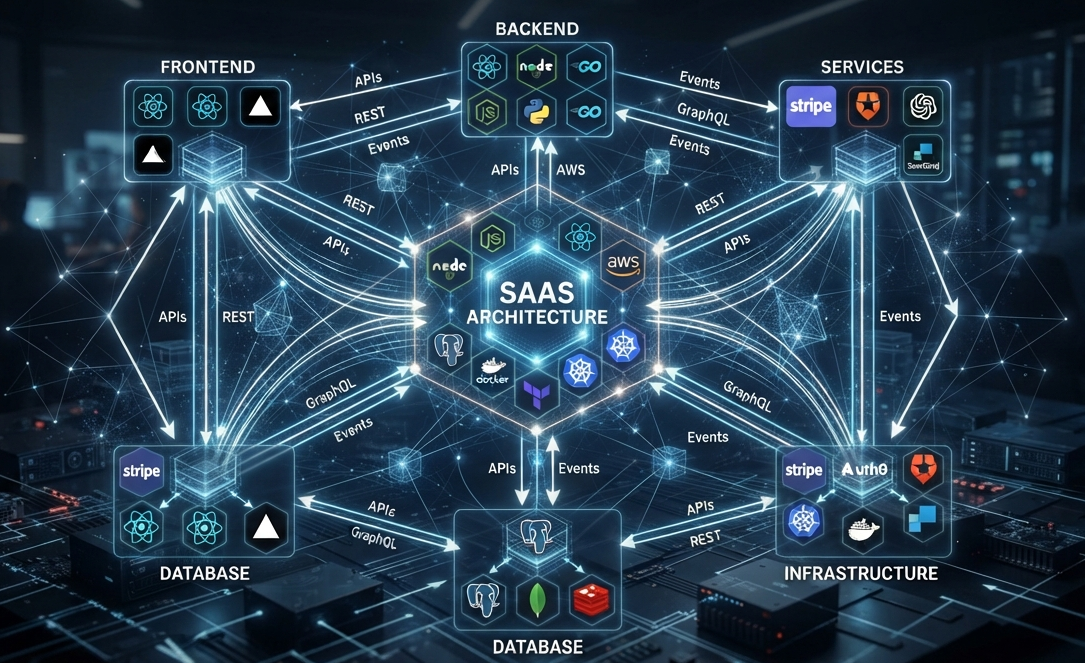
Building a SaaS startup is not just about launching features quickly.
It is about creating infrastructure capable of supporting long-term growth, user demand, operational flexibility, and rapid product evolution.
The technology stack behind a SaaS product directly impacts scalability, development speed, performance, and future technical costs.
“The best SaaS products scale smoothly because the architecture was designed for growth from the beginning.”
What is a SaaS tech stack?
A SaaS tech stack is the collection of technologies used to build and operate a software platform.
- Frontend frameworks
- Backend infrastructure
- Databases
- Cloud services
- Authentication systems
- API integrations
- DevOps infrastructure
Every technology decision affects scalability, maintainability, and operational efficiency.
Frontend technologies for modern SaaS products
Frontend systems shape the user experience and platform responsiveness.
- React for scalable UI architecture
- Next.js for performance optimization
- Vue.js for lightweight flexibility
- Tailwind CSS for rapid UI development
- TypeScript for safer large-scale applications
Modern frontend systems prioritize speed, responsiveness, and scalable component structures.
Backend technologies for scalability
The backend controls operational logic, infrastructure scalability, and system reliability.
- Node.js for fast API-driven systems
- Java Spring Boot for enterprise-grade architecture
- Go for high-performance infrastructure
- Python for AI-powered systems
- NestJS for scalable backend organization
Backend architecture should support future scalability long before traffic growth begins.
Database systems for SaaS applications
- PostgreSQL for structured relational systems
- MongoDB for flexible document-based storage
- Redis for caching and performance optimization
- ElasticSearch for advanced search systems
Database architecture plays a critical role in application speed, scalability, and operational stability.
Cloud infrastructure and DevOps
Modern SaaS products require cloud-native deployment strategies capable of scaling dynamically.
- AWS for enterprise cloud infrastructure
- Google Cloud for scalable data systems
- Docker for containerization
- Kubernetes for orchestration
- CI/CD pipelines for rapid deployment
Strong DevOps systems reduce downtime while improving scalability and operational efficiency.
Why API-first architecture matters
Modern SaaS ecosystems rely heavily on integrations and connected digital workflows.
- Payment systems
- CRM integrations
- AI services
- Automation platforms
- Analytics systems
API-first architecture improves flexibility, scalability, and long-term product adaptability.
Common mistakes startups make when choosing a tech stack
- Choosing trends instead of scalability
- Ignoring future infrastructure costs
- Overengineering MVP products
- Weak database planning
- Poor DevOps preparation
- Underestimating performance optimization
The best stack is not always the newest technology.
It is the one that aligns with long-term business growth and operational requirements.
How Edge of Content builds scalable SaaS infrastructure
Edge of Content develops scalable SaaS products using modern frontend systems, cloud-native infrastructure, API-first backend architecture, and high-performance engineering workflows.
- Custom SaaS development
- Cloud-native infrastructure
- Modern UI/UX systems
- Scalable backend engineering
- DevOps and deployment optimization
- Performance-focused architecture
We help startups build technology systems designed for long-term scalability instead of short-term limitations.
Great SaaS companies are built on scalable infrastructure decisions.
The right tech stack creates faster growth, better performance, lower technical debt, and stronger long-term product stability.